.png)
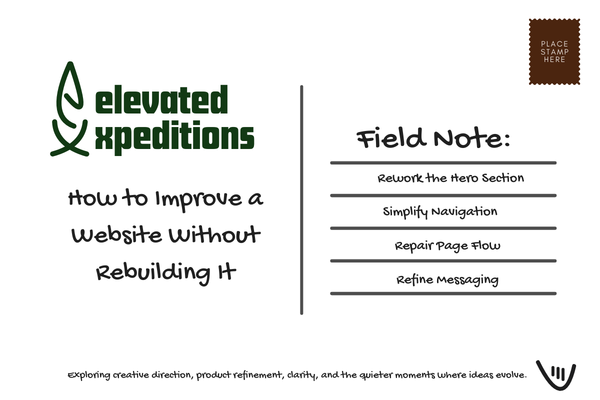
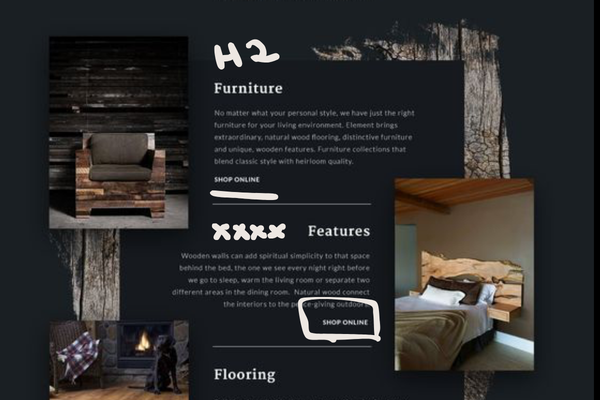
There’s a moment almost every business owner hits.
You look at your website and think:
Something is off.
It’s not broken.
It’s not embarrassing.
It just doesn’t feel aligned with who you’ve become.
The immediate instinct is a rebuild.
New platform. New theme. New layout. Fresh start.
But most websites do not need to be rebuilt.
They need to be strengthened.
This article walks through how to improve a website without starting over. It blends practical SEO, modern AI visibility thinking, and real user experience refinement. If you run Webflow, Shopify, WordPress, or any modern platform, this approach applies.
Improving a website without rebuilding means refining the structure, messaging, navigation, and performance of an existing site without migrating platforms or redesigning from scratch.
It focuses on:
It does not mean applying surface polish.
It means improving the way people move through the system.
This is the foundation of Website Elevation and SEO.
Rebuilding feels decisive.
It feels like progress.
But it often masks the real issue.
In most cases, the underlying problems are:
None of those require a new platform.
They require direction.
A rebuild resets design.
Refinement strengthens intent.
A redesign focuses on appearance.
Elevation focuses on movement.
Redesign asks:
How does it look?
Elevation asks:
How does it guide?
A website is not a brochure. It is a system. And systems improve through structure.
The hero section carries disproportionate weight.
In three seconds, visitors are asking:
Strong hero refinement includes:
Many websites can increase conversions without redesign simply by rewriting this section.
Search intent examples this aligns with:
Navigation should reflect decisions, not departments.
Instead of listing internal categories, organize around user actions.
Common elevation adjustments:
A simplified navigation improves:
This aligns directly with Step 2: Elevate in the Process framework.
Most websites fail at sequencing.
Information is present, but it is scattered.
Strong page flow typically follows:
This applies to:
AI systems now summarize based on structure. Clean header hierarchy improves both human and machine comprehension.
If your content jumps, summaries suffer.
Flow is not visual. It is structural.
Old school SEO focused on keywords.
Modern AI visibility focuses on semantic clarity.
You need both.
Instead of repeating internal language, align with what business owners actually search for:
Then:
Generative systems prioritize:
SEO is still the foundation. GEO extends it.
You do not need new colors to improve perception.
Elevation often includes:
Visual hierarchy directs attention.
When attention is directed, conversions rise.
This applies whether you are:
Platform rarely limits improvement. Structure does.
Before rebuilding, assess:
These refinements improve:
Most sites leave technical structure half-built.
That is opportunity.
Many websites have contact forms.
Few have conversion journeys.
Improvement often includes:
People convert when uncertainty drops.
Uncertainty drops when sequencing improves.
Rebuild when:
Rebuild because of constraint.
Not because of discomfort.
In 2026 and beyond, digital strategy is not about more content.
It is about structured content.
AI systems retrieve based on:
A refined website:
Website improvement is not cosmetic.
It is strategic infrastructure.
When elevation is done well:
More importantly, the website feels aligned with the current version of the business.
Not the past one.
No. Most SEO improvements come from structure, messaging alignment, internal linking, and technical optimization. These do not require a rebuild.
Yes. Both platforms allow structural, UX, and SEO improvements without full redesigns.
In most cases, yes. Clear sequencing reduces friction and improves decision confidence.
If the platform functions and the architecture is intact, refinement is usually sufficient.
If your website feels close but unfinished, rebuilding may not be the answer.
Improvement through structure, flow, and search alignment often delivers stronger results with less risk.
Explore Website Elevation and SEO services. Or begin with a Field Evaluation to understand where refinement will create leverage.

The first step is a conversation. You do not need a perfect idea. You only need curiosity and a sense that your idea could become something stronger.